Egypt eSIM: Coverage, Data Plans, and SIM Registration Rules
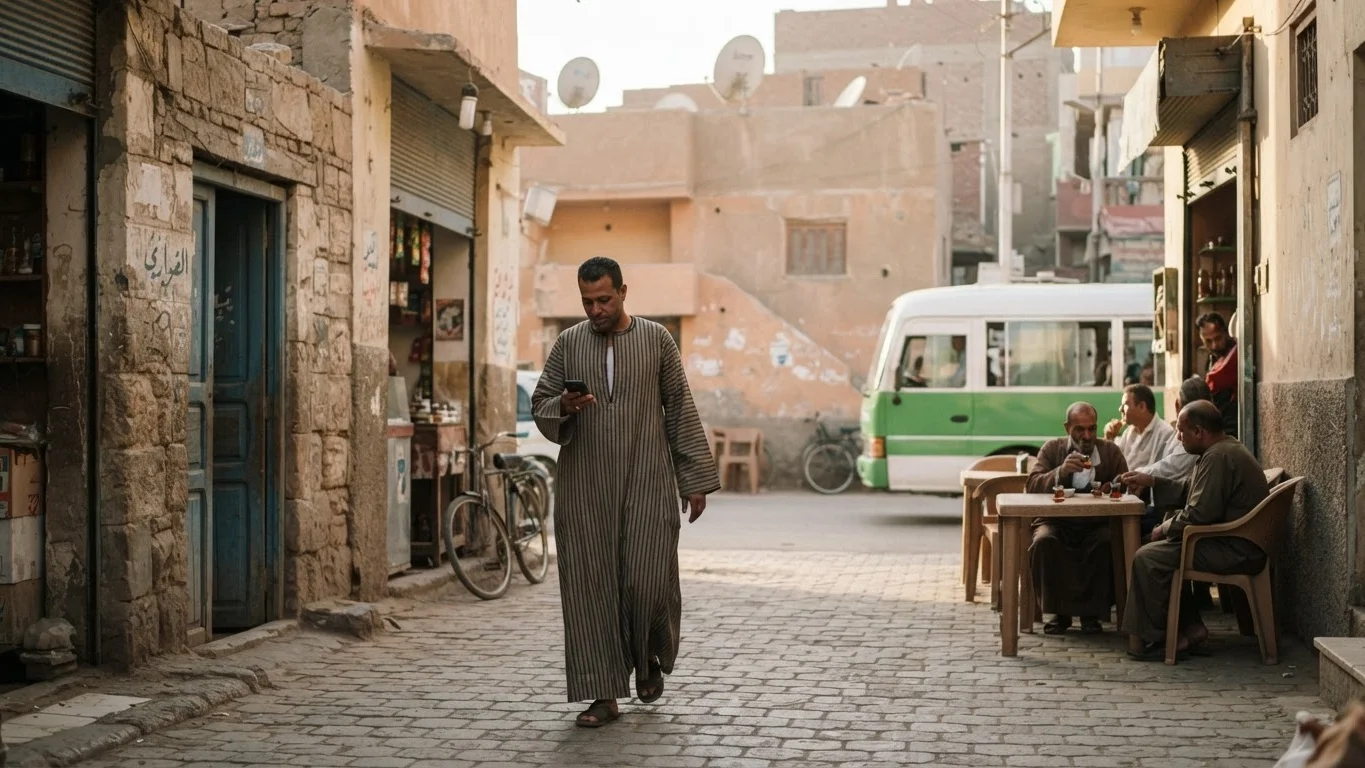
Egypt trips usually mean a mix of Cairo traffic, Nile cruises, and Red Sea resorts, and mobile coverage across that range is generally reliable in populated areas. An eSIM installed before you fly gets you online as soon as you land, without the phone-registration process that applies to physical tourist SIM cards. This guide covers Egypt's networks, that registration rule, how much data to buy, and setup steps.
Sept. 28, 2026
Do you need an eSIM for Egypt?
Most visitors do. Maps, translation, ride-hailing (Uber and Careem operate widely in Egyptian cities), and messaging apps all assume a data connection, and free Wi-Fi outside hotels is limited. An eSIM installed in advance means you're online immediately on arrival, without a counter visit or paperwork at the airport.
An eSIM is a digital SIM profile installed by scanning a QR code, not a physical card you insert. Most phones from the last five to six years support it — iPhone XS and later, and most recent Android flagships. Check your phone's settings for "eSIM" support before you buy.
Networks and coverage in Egypt
GoSIM's Egypt eSIM plans connect to Etisalat, Orange, or Vodafone, depending on the specific plan (see the Egypt eSIM plans). These are Egypt's main mobile operators, and coverage is generally solid in populated areas:
- Strong 4G/5G in Cairo, Alexandria, Luxor, and major Red Sea resort towns like Hurghada and Sharm El Sheikh.
- Reasonable coverage along the Nile cruise route and main highway corridors.
- Weaker or patchy signal in desert areas away from towns, and in some more remote parts of Sinai.
If your itinerary is mostly Cairo, the Nile cities, and the main resort towns, you should have reliable data throughout. Heading into the desert or more remote Sinai routes, expect gaps and plan offline maps as backup.
SIM registration rules: physical SIMs only
Egypt's telecom regulator, the National Telecommunications Regulatory Authority (NTRA), requires any local Egyptian SIM line — physical or eSIM — bought directly from a local operator (Vodafone, Orange, Etisalat, or WE) to be registered to a passport in person at a branch. This is a long-standing requirement, and it's part of why buying a local SIM or eSIM at an Egyptian carrier's own counter can involve a queue and some paperwork.
This registration requirement is tied to buying directly from a local Egyptian operator, not to a travel eSIM bought online from an international provider like GoSIM. An international travel eSIM purchased before your trip and installed via QR code operates under a separate roaming arrangement, so it doesn't require an in-person passport registration at an Egyptian carrier branch. If you're told you need to register a SIM in Egypt, that applies to getting a line directly from a local operator, not to the standard GoSIM eSIM purchase-and-install flow.
How much data do you need?
A rough guide for an Egypt trip:
- Light use (maps, messaging, occasional browsing): 500 MB–1 GB per day.
- Moderate use (social media, browsing, ride-hailing, photo uploads): 2–3 GB per day.
- Heavy use (video streaming, video calls, large uploads): 5 GB or more per day.
GoSIM's Egypt plans include 1-day "unlimited" options (a fixed high-speed allowance — for example 500 MB, 1 GB, 2 GB, 3 GB, or 10 GB — followed by reduced-speed data rather than a hard cutoff) and top-up plans valid for 7, 15, or 30 days. For a one- to two-week trip with moderate use, a 5–10 GB plan valid for 30 days is a reasonable middle ground; a short resort stay can get by on one or two 1-day plans. Full current data amounts and prices are listed on the Egypt destination page; GoSIM's plans start at $2.99.
Setting up your Egypt eSIM
- Buy before you fly, while you have Wi-Fi or home mobile data — downloading the eSIM profile needs an internet connection, and it's easier before departure than at the airport.
- Scan the QR code. GoSIM delivers it instantly by email/on-screen after checkout — no app or account required. Go to Settings > Cellular (or Mobile Data) > Add eSIM / Add Cellular Plan, and scan.
- Label the new line separately from your home SIM, and turn on data roaming for that specific eSIM line.
- Set the eSIM as your data line, and consider disabling data on your home SIM to avoid stray charges.
- Activate on arrival. Most GoSIM plans start their validity countdown on first use, not at purchase, so you can install days in advance and it won't burn through validity until you connect in Egypt.
Pitfalls specific to Egypt
"Unlimited" plans throttle, they don't cut off. GoSIM's unlimited-style Egypt plans give a fixed high-speed allowance, then continue at a reduced speed (often 384–512 Kbps, sometimes 500 Kbps or 1 Mbps) rather than stopping outright — fine for maps and messaging, not for streaming.
Don't confuse eSIM setup with physical SIM registration. As above, the passport-registration process tourists sometimes hear about applies to physical SIM cards bought locally, not to an eSIM installed via QR code before travel.
Multiple carriers, one SIM type. Etisalat, Orange, and Vodafone all serve Egypt, and which one your eSIM connects to depends on the plan you buy, not anything you configure. If you have a strong preference for a specific carrier's coverage in an area you're visiting, check the plan details before purchase.
Refunds. If you buy a plan and never activate it, GoSIM offers a 7-day refund window on eSIMs that haven't been used.
FAQ
Do I need to register my eSIM with the NTRA? No. NTRA's passport-registration requirement applies to SIM lines bought directly from a local Egyptian operator (physical or eSIM). It doesn't apply to a travel eSIM bought online from an international provider like GoSIM and installed by QR code.
Which networks does an Egypt eSIM use? GoSIM's Egypt eSIM plans run on Etisalat, Orange, or Vodafone depending on the plan. All three have solid coverage in Cairo, Alexandria, Luxor, and the main Red Sea resorts.
Will my eSIM work on a Nile cruise or in the desert? Coverage is generally good along the Nile cities and cruise route. In open desert or remote parts of Sinai, expect weaker or no signal — this is a coverage limit of the local towers, not the eSIM itself.
How much data do I need for a week in Egypt? For moderate use (maps, messaging, ride-hailing, some browsing), plan on 2–3 GB per day, or a 5–10 GB plan for a one- to two-week trip.
How much does an Egypt eSIM cost? GoSIM's Egypt eSIM plans start at $2.99 for a small allowance, with larger options available. Check the Egypt destination page for current prices, since these can change.
Can I get a refund if I don't use my eSIM? Yes — GoSIM offers a 7-day refund for eSIMs that haven't been activated.
Do I need an app to use my eSIM in Egypt? No. GoSIM eSIMs are delivered by QR code and installed through your phone's built-in settings — no app or account needed.
Comparing providers? See our Egypt eSIM price comparison with Airalo and Nomad.
How we compare
No account needed.
Browse eSIM plans for Egypt →